
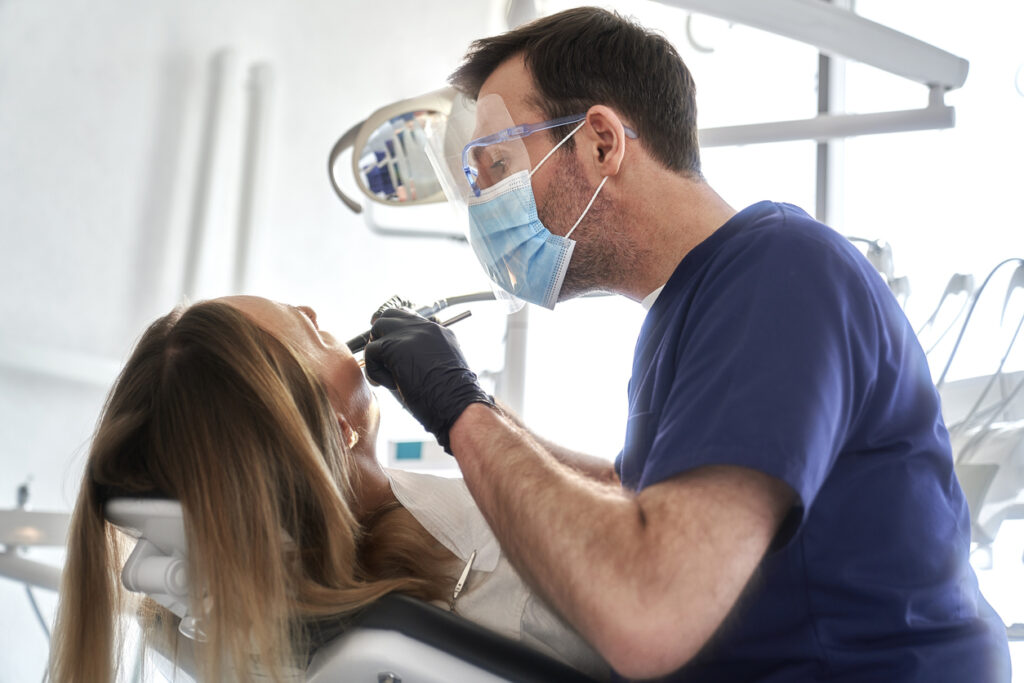
A comprehensive new patient dental exam is a complete diagnostic evaluation where your dentist reviews your medical history, captures low-radiation digital X-rays, and thoroughly assesses your teeth, gums, and jaw. This baseline assessment identifies early decay or disease to create a personalized, long-term roadmap for your oral health.
Overcoming Dental Anxiety Before You Even Arrive
Medical literature supports the need for widespread research into the factors affecting dental anxiety and its adverse effects on society [1] (Muneer et al., 2022). Millions of adults suffer from dental anxiety. Many patients delay their first visit because they had a traumatic experience in childhood or fear that they may require extensive dental work. Modern dentistry at Azalea Dental is built on empathy. To make your first visit easier, we encourage you to take control of your environment. When you book your appointment, tell our front desk team that you are nervous. We will add a note to your file so Dr. Heinsheimer and our hygienists know to take things extra slow. Feel free to bring your favorite noise-canceling headphones to listen to a podcast or ask for a warm blanket during your exam. Your comfort is a medical priority to us, and we will move at the exact pace you need to feel safe.
The Role of Low-Radiation Digital X-Rays in Early Detection
Clinical literature supports that cavitation of proximal lesions has relied on lesion depth on the bitewing X-rays [2] (Abdelaziz et al., 2023). A common question new patients ask is, “Are X-rays really necessary if my teeth do not hurt?” The short answer is yes. By the time a tooth physically hurts, the decay has usually reached the inner nerve, which often requires a more complex and expensive fix. Digital X-rays act as our early-warning system. At Azalea Dental, we utilize advanced digital radiography that emits up to 90% less radiation than traditional film X-rays. These high-definition images allow us to see exactly what is happening beneath your gum line, inside your jawbone, and in the tight spaces between your teeth. We can spot microscopic cavities, monitor the position of your wisdom teeth, and detect early signs of bone loss. By catching these invisible issues early, we save you from invasive treatments and keep your natural smile intact.
A Table that compares dental visits
Exam type | DIagnostic focus | Estimated out-of-pocket impact | Maintenance level |
New patient exam | Full baseline | Highly affordable | Once every 3-5 years |
Routine periodic exam | Maintenance | Highly affordable | Biannually |
Emergency exam | Targeted focus | Moderate | As needed for pain and trauma |
What Your Gum Health Says About Your Total Body Wellness
Your mouth is not isolated from the rest of your body; it is the gateway to your overall health. During your new patient exam, we dedicate a specific portion of your visit to periodontal (gum) mapping. You might hear us calling out a series of numbers to our dental assistant. We are gently measuring the natural pocket depth between your gums and your teeth to check for inflammation. Clinical research heavily links chronic gum disease to systemic health issues, including heart disease, unregulated diabetes, and immune system complications. Clinical evidence supports that periodontitis may have overall health consequences, specifically pertaining to cardiovascular diseases and associated diagnoses [3] (Hopkins et al., 2024). If harmful bacteria are allowed to hide deep in your gum pockets, they can enter your bloodstream. By establishing a healthy baseline for your gums during your first visit, we are protecting your teeth and actively protecting your cardiovascular health and overall well-being.
Why We Show You Exactly What We See
We strive to empower the patient-dentist relationship by empowering our patients to directly visualize what we see when examining them. By using small, pen-sized intraoral cameras, we take high-definition photos of the inside of your mouth and display them on a monitor right in front of your chair. If there is a cracked filling or a spot of decay, we will point it out to you on the screen. We explain the “why” behind every recommendation in simple, plain language. . When you can actually see the condition of your own teeth, it removes the mystery and puts you back in the driver’s seat of your healthcare decisions.
The Phased Treatment Plan
The goal of your first exam is not to overwhelm you with a massive to-do list. Once we have gathered all of your X-rays, photos, and clinical notes, we sit down with you to create a prioritized, phased treatment plan. We break your oral health needs down into easy, manageable steps. First, we prioritize any active infections or issues causing you pain. Next, we look at preventative measures to stop early decay in its tracks. Finally, we can discuss any elective or cosmetic goals you might have for the future. Whether you are a busy professional running to a meeting in downtown Wilmington or a parent managing the family budget, we tailor this blueprint’s timeline to fit your life. You leave our office with absolute clarity on your next steps, with zero pressure to do it all at once.
FAQS
Will my teeth be cleaned during my first exam?
In most cases, yes. As long as your gum evaluation reveals healthy tissues without severe periodontal disease, our hygienist will perform a professional preventive cleaning during the same appointment. If we discover you need a more advanced “deep cleaning,” we will schedule that for a dedicated follow-up visit.
How long does a new patient dental appointment take?
Because we are incredibly thorough and never rush our new patients, you should expect your first visit to take about 60 to 90 minutes. This gives us ample time to take X-rays, perform a cleaning, and have an unhurried conversation with your dentist.
What if it has been years since I last saw a dentist?
You are exactly who we love to help. We are a zero-judgment practice. Our only goal is to assess where your oral health is today and help you move forward. You will never receive a lecture from our team, only supportive, expert care.
References
[1] Muneer, M. U., Ismail, F., Munir, N., Shakoor, A., Das, G., Ahmed, A. R., & Ahmed, M. A. (2022). Dental Anxiety and Influencing Factors in Adults. Healthcare (Basel, Switzerland), 10(12), 2352. https://doi.org/10.3390/healthcare10122352
[2] Abdelaziz M. (2023). Detection, Diagnosis, and Monitoring of Early Caries: The Future of Individualized Dental Care. Diagnostics (Basel, Switzerland), 13(24), 3649. https://doi.org/10.3390/diagnostics13243649
[3] Hopkins, S., Gajagowni, S., Qadeer, Y., Wang, Z., Virani, S. S., Meurman, J. H., Leischik, R., Lavie, C. J., Strauss, M., & Krittanawong, C. (2024). More than just teeth: How oral health can affect the heart. American heart journal plus : cardiology research and practice, 43, 100407. https://doi.org/10.1016/j.ahjo.2024.100407