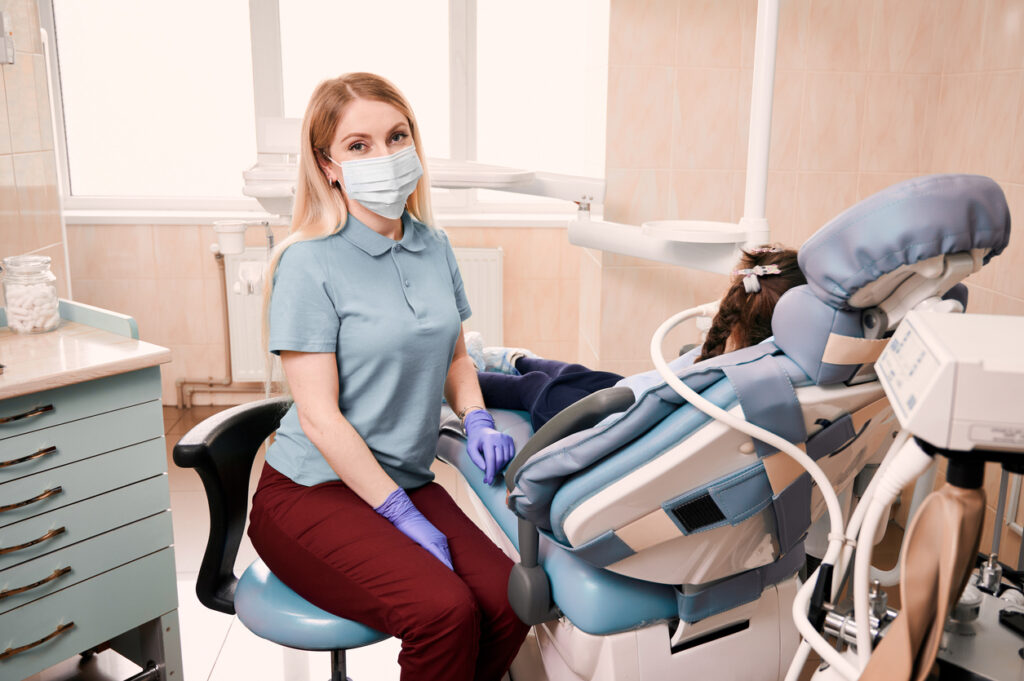
Sedation dentistry is a specialized medical approach that uses safe, FDA-approved medications to help patients deeply relax during dental procedures. By suppressing the central nervous system’s fear response, sedation eliminates anxiety, minimizes the gag reflex, and allows dentists to perform multiple treatments in a single, stress-free appointment.
Overcoming a Sensitive Gag Reflex During Routine Care
For many patients, dental anxiety is driven by the fear of choking or gagging. A hypersensitive gag reflex is an involuntary physical response that can make routine dental X-rays, impression-taking, or even a standard cleaning feel unbearable. Because medications like Nitrous Oxide and Oral Conscious Sedation depress your central nervous system, they drastically relax the muscles in your throat and suppress the involuntary urge to gag. When compared to general anesthesia, medical literature supports that propofol IV sedation is preferred over general anesthesia because it is a simpler procedure [1] (Shin et al., 2017). You can comfortably breathe while our Azalea Dental hygienists and doctors work, resulting in a less stressful experience.
Anterograde Amnesia: Why you will not remember the dental chair
A remarkable benefit of Oral Conscious Sedation is a biological feature known as anterograde amnesia. Clinical evidence suggests that amnesia is significantly associated with subjects who underwent sedation [2] (Patel et al., 2025). When you take a prescribed oral sedative before your appointment, the medication temporarily alters how your brain stores new memories. This means that while you will remain awake enough to breathe safely on your own and respond to simple questions from Dr. Heinsheimer, your brain will simply not record the experience. You will not remember the sound of the dental instruments, the bright lights, or the time spent in the chair. For a patient who has spent years terrified of the dentist, waking up at home with a restored smile and zero traumatic memories of the procedure can be life-changing.
The Fix for Novocain Resistance and Dental Adrenaline
When you are terrified of the dentist, your brain floods your bloodstream with adrenaline. This adrenaline rush increases your heart rate and causes your body to metabolize local anesthetics like Novocain much faster than normal. Sedation dentistry solves this biological roadblock. By artificially calming your central nervous system before the procedure begins, your heart rate slows down, and your adrenaline levels drop to normal. Because your body is no longer in a state of “fight or flight,” the local numbing medication can take effect. It absorbs properly into your gum tissue and lasts much longer, guaranteeing that your procedure is physically painless.
A table that compares sedation types
Sedation modality | Cost | Experience | Recovery |
Nitrous oxide | Low cost | Mild euphoria and fully awake | Very low |
Oral conscious sedation | Moderate | Deep relaxation with an amnestic effect | High |
Local numbing | $0 | Fully awake and alert | Low |
Catching Up on Years of Missed Dental Work
If you have not seen a dentist for five, ten, or even fifteen years, the thought of catching up on your oral health can feel overwhelming. You may need multiple cavity fillings, a porcelain crown, and a deep periodontal cleaning. Traditionally, tackling that list would require you to take time off work for four or five separate appointments. For busy patients, sedation dentistry is a time saver. Because you are deeply relaxed, our clinical team can work efficiently. We can seamlessly combine several individual treatments into a single, extended appointment.
Breaking the Cycle of Dental Avoidance
Psychologists recognize a very specific pattern known as the “Cycle of Dental Avoidance.” It starts with fear, which leads you to skip your bi-annual checkups. Although fear is one reason, clinical evidence suggests that there are many factors that may affect dental care attendance [3] (Lukacs et al., 2025). After several missed preventative exams, microscopic cavities can grow into painful infections. Eventually, the pain forces you to visit the dentist for a high-stress emergency procedure, which only reinforces your original fear. Asking for sedation is a proactive way to break this cycle. By ensuring that your next visit to Azalea Dental is completely comfortable, pain-free, and memory-free, you are actively retraining your brain to view the dentist as a safe space. Once you experience how easy modern dentistry can be with the help of safe sedatives, you will feel empowered to maintain your routine health without carrying significant panic or anxiety.
FAQS
1. Can I be sedated just for a deep cleaning?
Absolutely. If you have been diagnosed with periodontal disease but experience severe dental anxiety or highly sensitive gums, we can use Nitrous Oxide or oral sedation to keep you completely comfortable while our hygienists perform your deep cleaning (scaling and root planing).
2. Will I say anything embarrassing while under oral sedation?
This is a very common fear! Unlike the viral videos of patients waking up from heavy general anesthesia at the hospital, oral conscious dentistry keeps you in a state of deep, peaceful relaxation.
3. Who is not a good candidate for sedation dentistry?
While incredibly safe, oral sedation is not for everyone. Patients who are pregnant, suffer from severe respiratory issues (like advanced COPD), or are taking specific central nervous system depressants may need to avoid certain sedatives.
References
[1] Shin, S., & Kim, S. (2017). Dental treatment in patients with severe gag reflex using propofol-remifentanil intravenous sedation. Journal of dental anesthesia and pain medicine, 17(1), 65–69. https://doi.org/10.17245/jdapm.2017.17.1.65
[2] Patel S, Amini H, Claman D, Gross E, Casamassimo PS, Meyer B. A Cross-Sectional Evaluation of Pediatric Dental Sedation: Examining Post-Discharge Events, Amnestic Effects, and Parental Satisfaction. Pediatr Dent. 2025;47(3):163-171.
[3] Lukács, M., Fábián, B., Bugán, A., & Varga, I. (2025). The psychosocial background of dental care avoidance: A qualitative study. Oral diseases, 31(3), 1017–1023. https://doi.org/10.1111/odi.15136