
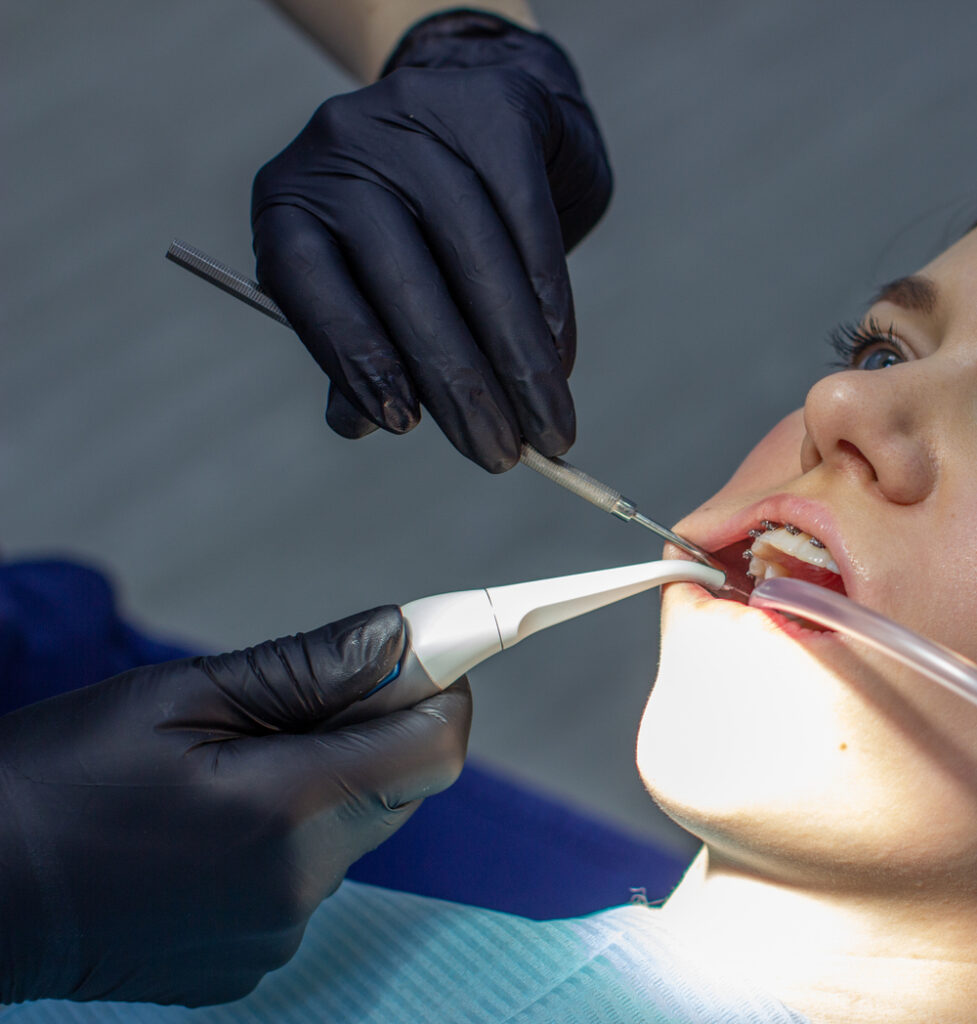
Oral conscious sedation medications are prescription anti-anxiety pills, typically benzodiazepines like Triazolam, Diazepam, or Lorazepam, administered by your dentist before a procedure. These medications at Azalea Dental safely depress the central nervous system to eliminate fear, suppress your gag reflex, and induce a temporary amnesic effect. Clinical evidence supports that oral conscious sedation is a technique in which drug-induced depression of consciousness is performed, and the patient retains the ability to self-ventilate [1] (Bean et al., 2023).
How We Monitor You While You Rest
Research indicates that oral conscious sedation is effective for reducing anxiety in patients undergoing periodontal surgery, promoting better acceptance of the procedure without causing significant respiratory depression [2] (Shivananda et al., 2014). A common fear among patients is the thought of being too far under or losing control. It is perfectly natural to want reassurance that you are safe when taking a strong anti-anxiety medication. Oral conscious sedation is incredibly safe because you never actually lose consciousness. You will continue to breathe entirely on your own and can still respond to our team’s verbal cues. To ensure absolute safety, our clinical team treats your visit with medical-grade precision. The moment you sit in the chair, we attach a small, painless pulse oximeter to your finger. This allows us to continuously track your blood oxygen saturation and heart rate in real time. We also monitor your blood pressure throughout the procedure. By keeping a close eye on your vital signs, we ensure your body remains in a perfect, relaxed state of harmony while we work on your smile.
How Your Body Metabolizes Dental Sedatives
If you are a busy professional, you likely want to know exactly when the medication will leave your system so you can return to daily activities. The timeline depends on your liver’s metabolic rate and the half-life of the respective medications. Medications like Triazolam and Diazepam are broken down by specific enzymes in your liver before being flushed out through your kidneys. Scientific literature provides definitive evidence that both diazepam and midazolam are metabolized in the liver [3] (Yang et al., 2023). Because everyone’s metabolism is different, the “half-life” varies. This is exactly why we require you to fast before taking the medication; an empty stomach allows the medication to be absorbed predictably. Once the procedure is over, your body continues breaking down the residual medication over the next 12 to 24 hours. Drinking plenty of water while you rest at home helps flush your system, ensuring you wake up the next morning with a clear head and zero “sedation hangover.”
A table that compares oral medications
Medication type | Cost impact | Durability | Maintenance level |
Triazolam | Highly affordable | 2 -4 hours | Low |
Lorazepam | Highly affordable | 4 – 6 hours | Moderate |
Diazepam | Highly affordable | 6 – 8hours | High |
The Off-Switch for a Severe Gag Reflex
Many patients avoid the dentist not because they fear the drill, but because they have a hypersensitive gag reflex. If having a mirror or an X-ray sensor in your mouth makes you gag or choke, dental visits can be terrible. This is an involuntary biological response designed to protect your airway. Oral sedation medications act as the ultimate biological “off-switch” for this problem. Benzodiazepines specifically target and relax the pharyngeal muscles in the back of your throat. Furthermore, because these pills suppress the panic center of your brain, your body stops perceiving our dental tools as a threat. You can comfortably keep your mouth open for the entire procedure without a single urge to gag, allowing our team to work much faster and more efficiently.
Who Should Avoid Oral Conscious Sedation?
While oral sedation is highly effective for the vast majority of our patients, it is not for everyone. During your consultation, we will thoroughly screen your medical history. We typically avoid prescribing oral conscious sedation if you are pregnant or nursing, as these medications can cross the placenta or enter breast milk. We also exercise extreme caution with patients who have severe, untreated Obstructive Sleep Apnea (OSA), as sedatives can further relax the airway muscles and complicate breathing. Clinical literature supports that Obstructive sleep apnea (OSA) is a recognized risk factor for complications during anesthesia in both the intraoperative and postoperative periods [4] (Ganzberg et al., 2016). Finally, if you have severe kidney or liver disease, your body may struggle to filter the medication out of your bloodstream. In these cases, we will happily discuss alternative, safer comfort options, such as Nitrous Oxide.
Why You Still Need Local Numbing with the Sedation Pill
A very common misunderstanding is that the sedation pill itself will numb your teeth. The pill is designed strictly to block panic, not pain. To ensure your procedure is completely painless, we use a highly effective two-step synergy. First, the sedation pill relaxes your mind and lowers your heart rate. Once you are deeply relaxed and the amnesic effect has kicked in, Dr. Barbaro gently administers a local anesthetic directly to your gums to numb the tooth. Interestingly, taking the sedation pill actually makes the local numbing work better. When you are severely anxious, your body pumps adrenaline into your bloodstream, which quickly washes the numbing medication away. Because the sedation pill stops that adrenaline spike, your localized numbing takes effect faster, feels more profound, and lasts much longer.
FAQS
1. Will the dental sedation pill make me say something embarrassing?
This is a very common fear! Unlike the viral videos of teenagers acting wild after IV anesthesia, oral conscious sedation simply makes you feel incredibly tired and peaceful.
2. How long before my appointment do I take the sedation pill?
This depends on the specific medication Dr. Barbaro prescribes. Triazolam acts very quickly and is usually taken about 45 minutes before your appointment. Diazepam takes longer to enter your bloodstream, so we may instruct you to take it an hour or two before you arrive.
3. Can I take my daily medications while on dental sedation?
You must disclose all daily medications, vitamins, and supplements you take during your consultation. Certain medications, especially SSRIs (antidepressants), antihistamines, and blood pressure medications, can negatively interact with benzodiazepines or amplify their effects.
References
[1] Bean T, Aruede G. Conscious Sedation in Dentistry. [Updated 2023 Apr 23]. In: StatPearls [Internet]. Treasure Island (FL): StatPearls Publishing; 2026 Jan-. Available from: https://www.ncbi.nlm.nih.gov/books/NBK592406/
[2] Shivananda, H., Raghava, K. V., Sudhakar, S. K., Thomas, B., & Dayakar, M. M. (2014). Comparative evaluation of oxygen saturation during periodontal surgery with or without oral conscious sedation in anxious patients. Journal of Indian Society of Periodontology, 18(6), 718–722. https://doi.org/10.4103/0972-124X.147406
[3] Yang, R., Zhao, R., Chaudry, F., Wang, T., Brunton, P., Khurshid, Z., & Ratnayake, J. (2023). Modern sedative agents and techniques used in dentistry for patients with special needs: A review. Journal of Taibah University Medical Sciences, 19(1), 153–163. https://doi.org/10.1016/j.jtumed.2023.10.004
[4] Ganzberg S. (2016). OBSTRUCTIVE SLEEP APNEA AND OFFICE-BASED SURGERY. Anesthesia progress, 63(2), 53–54. https://doi.org/10.2344/0003-3006-63.2.53