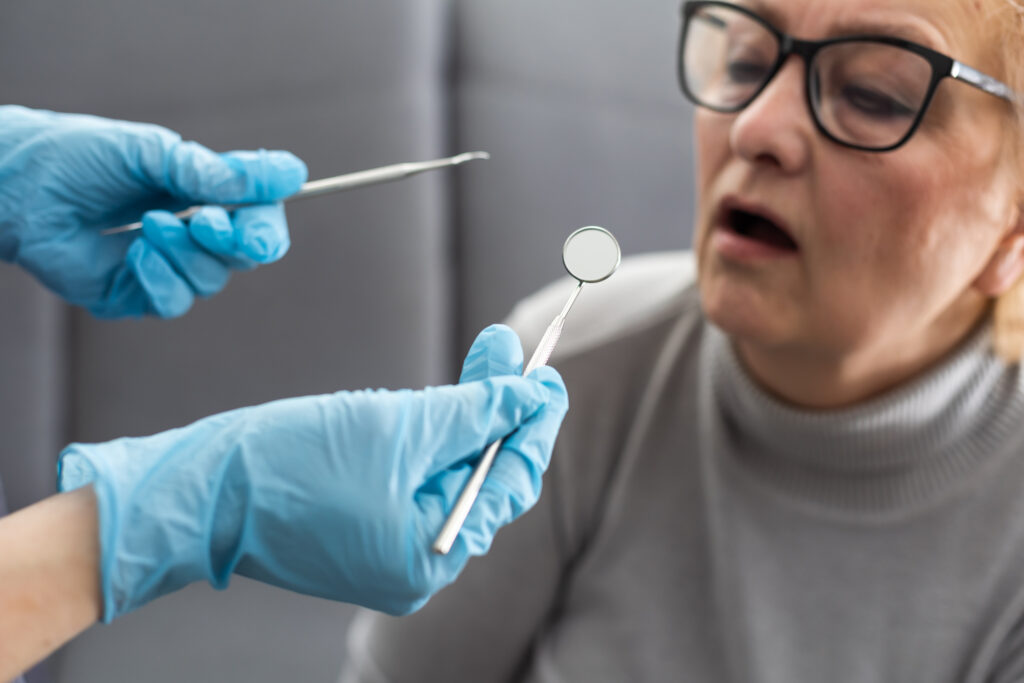
An oral cancer screening is a rapid, non-invasive examination performed by your dentist to detect early signs of cancerous or precancerous conditions in your mouth. At Azalea Dental, this life-saving evaluation is seamlessly integrated into every routine bi-annual dental checkup.
Understanding Lifestyle and Hidden Factors
While tobacco is one of the leading risk factors, the landscape of oral health is changing. Today, we see a significant rise in oral cancer cases among young, otherwise healthy individuals. One of the fastest-growing risk factors is the Human Papillomavirus (HPV). Medical literature supports the role of dentists in preventing HPV [1] (Lipsky et al., 2025). Because HPV-related oral cancers often develop at the very back of the throat or the base of the tongue, they are difficult to see in your bathroom mirror. Heavy alcohol consumption, prolonged sun exposure to your lips, and a family history of cancer can also elevate your risk. Whether you are a fitness-focused enthusiast or a busy parent, understanding these hidden triggers makes it clear why skipping your biannual screening is a risk you should not take.
Your Mouth is a Mirror to Your Health
Clinical evidence supports the essential role of collaborative dental-medical strategies in improving patient outcomes and systemic health management [2] (Al-Marzooq et al., 2025). In modern dentistry, we refer to this as the “oral-systemic connection.” Medical literature consistently shows that inflammation, bacterial infection, and cellular changes in your gum tissue can significantly affect your cardiovascular system, immune response, and overall wellness. During your screening, we are not just looking for cancer. We are monitoring your mouth for early signs of systemic diseases like diabetes, autoimmune disorders, and vitamin deficiencies. A simple two-minute checkup can sometimes uncover the clues needed to protect your whole-body health.
A table that compares oral diagnostic procedures
Procedure category | Accuracy | Estimated out-of-pocket cost | Maintenance level |
Routine visual screening | High for identifying visible surface anomalies | $0 | Bi-annual |
Tissue fluorescence screening | Very high | $25 – $60 | As recommended by dentists |
Soft tissue biopsy | Definitive diagnostic proof | $150 – $350 | One-time procedure for specific concerns |
What Happens if Dr. Heinsheimer Finds an Abnormality?
It is normal to feel a spike of anxiety at the thought of your dentist finding a suspicious abnormality. However, we want to replace that fear with clarity. If we notice an unusual red patch, a white lesion, or a small bump during your exam, do not panic. The vast majority of oral abnormalities are benign. They are often just harmless canker sores, tissue trauma from accidentally biting your cheek, or irritation from a sharp piece of food. If we spot something out of the ordinary, our first step is usually to monitor it. We will have you return in 10 to 14 days. If the spot is just a minor injury, it will typically heal within that timeframe. If the lesion has not resolved, we will guide you through the next steps, which may include a simple soft-tissue biopsy or a fast-tracked referral to a trusted oral surgeon or specialist.
How to Perform a Quick At-Home Self-Check Between Visits
While nothing replaces a professional evaluation with specialized dental lighting, you are the best advocate for your own health between your six-month appointments. We encourage all of our patients to perform a quick, one-minute self-check once a month. Here is what you should do after brushing your teeth:
- Feel your neck and jaw: Gently press along the sides of your neck and underneath your lower jaw to check for unusual, painless lumps.
- Check your lips and cheeks: Pull your upper and lower lips out to inspect the inner tissue.
- Inspect your tongue: Stick your tongue all the way out. Look at the top, then pull it to the left and right to check the sides.
- Listen to your body: Pay attention to persistent hoarseness, a chronic sore throat, or a feeling of something constantly caught in your throat.
The Role of Modern Dental Technology in Early Detection
At Azalea Dental, we utilize advanced dental technology to elevate the accuracy of your preventive care. High-magnification surgical loupes allow our clinical team to see microscopic tissue textures that are difficult to see under normal lighting. Furthermore, our digital intraoral cameras play a large role in your ongoing health. If we notice a minor, harmless freckle or a small tissue change on your gums, we can take a high-definition, full-color photograph of it and store it directly in your secure digital chart. When you return in six months, we can compare the tissue side by side on our monitors. This digital timeline removes all the guesswork, ensuring that even the most microscopic changes in your oral health are tracked, analyzed, and managed with expert precision.
FAQS
1. Does Azalea Dental do oral cancer screenings?
Yes, absolutely. We perform a comprehensive visual and tactile oral cancer screening for every patient during their routine 6-month checkup. It is a mandatory part of our commitment to your overall health.
2. Do I need a screening if I do not smoke or drink alcohol?
Yes. While tobacco use and heavy alcohol consumption are massive risk factors, a growing number of oral cancer cases are linked to the HPV virus in healthy, non-smoking adults. Regular screenings are essential for everyone, regardless of lifestyle.
3. What does an early sign of oral cancer look or feel like?
Early signs are often entirely painless. You might notice a white or red patch on your gums, a small lump on the side of your tongue, a sore throat that will not go away, or a feeling that something is caught in your throat. If any sore in your mouth lasts longer than two weeks, you should have us examine it immediately.
References
[1] Lipsky, M. S., Wolfe, G., Radilla, B. A., & Hung, M. (2025). Human Papillomavirus: A Narrative Review for Dental Providers in Prevention and Care. International journal of environmental research and public health, 22(3), 439. https://doi.org/10.3390/ijerph22030439
[2] Al-Marzooq, F. I., & Christidis, N. (2025). The interconnection of oral and systemic health. Scientific reports, 15(1), 14931. https://doi.org/10.1038/s41598-025-98718-1