
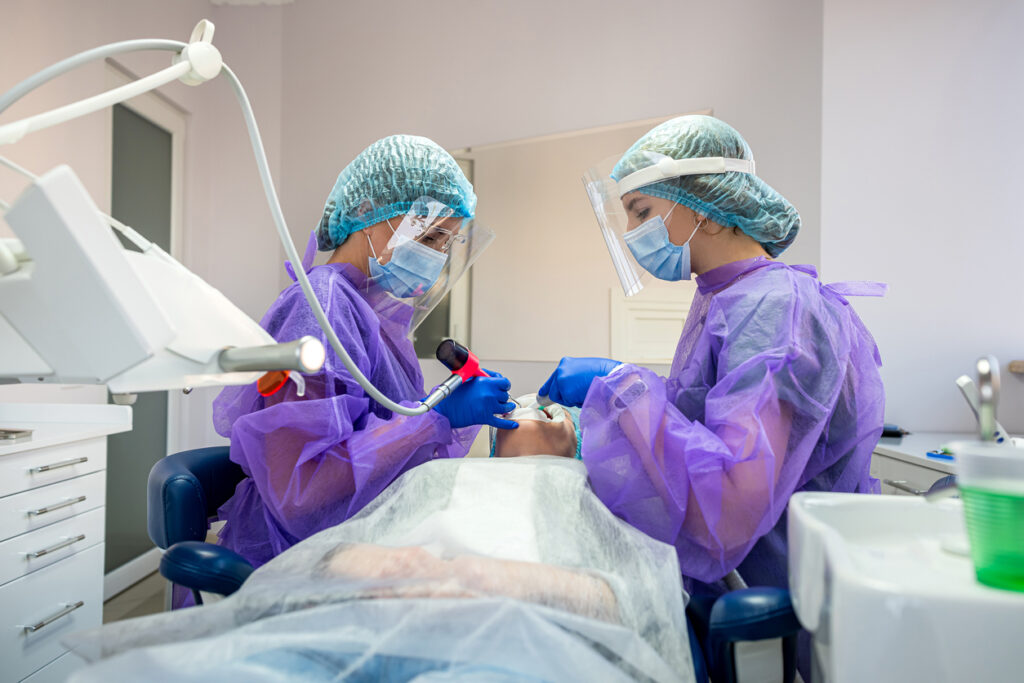
Dry socket, clinically known as alveolar osteitis, is a painful dental condition in which the protective blood clot at a tooth extraction site fails to form or dislodges prematurely. Preventing it requires avoiding suction, smoking, and vigorous spitting to ensure the underlying bone and sensitive nerves remain safely protected.
Normal Extraction Soreness vs. Dry Socket Pain
After a tooth extraction, some soreness and swelling are normal. The medical literature supports the view that the healing of the extraction socket involves four overlapping stages/phases that are modulated by various growth factors and cytokines [1] (Udeabor et al., 2023). Nonetheless, many patients panic at the first sign of an ache, assuming they have a dry socket. Normal recovery pain typically peaks around day two and steadily improves each day after. It feels like a dull, localized bruise. Dry socket pain, on the other hand, comes and goes. You might feel fine for the first two days, but around day three or four, a sudden, sharp, radiating pain strikes. This severe pain often travels up the side of your face, reaching your ear, eye, or temple. If your pain is getting progressively worse instead of better, we recommend calling Azalea Dental for an evaluation.
How to Keep Your Mouth Clean Without Disturbing the Clot
One dilemma patients face is how to brush their teeth without ruining their extraction site. You cannot simply stop brushing, as leaving plaque and bacteria in your mouth increases your risk of a secondary infection. For the first 24 hours, do not brush the teeth immediately next to the empty socket. You can carefully brush your other teeth using a soft-bristle toothbrush. Skip your harsh, alcohol-based mouthwashes entirely, as alcohol can burn the healing tissue and dissolve the clot. When it is time to clear the toothpaste from your mouth, do not swish and spit. Instead, fill your mouth with water, gently tilt your head from side to side, and simply lean over the sink to let the water fall out.
Table that compares recovery and dry socket intervention
Recovery scenario | Cost impact | Durability of relief | Maintenance level |
Standard healing | $0 | Healing in 7-10 days | Low |
Dry socket treatment | Low to moderate | Temporary relief | High |
Untreated dry socket | High | None | Very High |
When Is It Safe to Exercise Again?
Unfortunately, jumping back into your workout too soon is a risk factor for dry socket. When you exercise, your heart rate and blood pressure increase. Because your extraction site is still fresh, this spike in blood pressure can make the wound throb. In severe cases, the pressure can actually force the blood clot to pop out of the socket. Therefore, to protect your smile, avoid strenuous physical activity, heavy lifting, and intense cardio for 48 to 72 hours. Rest is the most productive thing you can do for your body after an extraction.
The Best Over-the-Counter Medications for Extraction Recovery
Properly managing your inflammation keeps you comfortable and helps your body heal faster. While Dr. Barbaro will provide specific instructions tailored to your health, most patients find excellent relief with standard over-the-counter medications. Anti-inflammatory medications like Ibuprofen (Advil or Motrin) are highly effective because they reduce gum tissue swelling while blocking pain signals. Clinical evidence indicates that Ibuprofen has one of the best safety profiles among nonselective NSAIDs, particularly at OTC doses [2] (Pozzi et al., 2011). However, you should avoid Aspirin during your early recovery. Aspirin is a known blood thinner. Taking it can prevent your vital blood clot from forming correctly in the first place, leaving you vulnerable to a dry socket. Always stick to the medications recommended by our clinical team.
The Dry Socket Rescue
If you do develop a dry socket, we do not want you sitting at home in pain. The treatment for a dry socket at Azalea Dental is incredibly fast, highly affordable, and does not involve any scary tools or needles. When you come in for an emergency dry socket visit, we simply rinse the empty socket with a gentle, sterile solution to remove any trapped food debris. Then we place a small medicated dressing directly into the hole. This dressing is typically coated with eugenol (clove oil), which acts as a powerful, natural anesthetic. The relief is almost instant. The throbbing stops, the nerves are protected, and you can finally get back to your normal routine while the tissue heals.
FAQS
1. When am I finally "in the clear" for a dry socket?
The highest risk window for developing a dry socket is between 72 and 96 hours (3 to 4 days) after your tooth is pulled. Once you successfully pass the one-week mark, your gum tissue has usually closed enough that a dry socket is highly unlikely.
2. Can I drink hot coffee after my tooth extraction?
You should avoid hot beverages for the first 24 to 48 hours. Hot liquids can increase blood flow to the area, causing the wound to bleed or the clot to dissolve prematurely. Stick to lukewarm or cold beverages during the initial healing phase.
3. What does a dry socket actually look like?
If you look into your mouth with a flashlight, a normal extraction site will look like a dark red or gelatinous scab. If you have a dry socket, the hole will look completely empty, and you may even see the whitish color of the exposed jawbone at the bottom of the socket.
References
[1] Udeabor, S. E., Heselich, A., Al-Maawi, S., Alqahtani, A. F., Sader, R., & Ghanaati, S. (2023). Current Knowledge on the Healing of the Extraction Socket: A Narrative Review. Bioengineering (Basel, Switzerland), 10(10), 1145. https://doi.org/10.3390/bioengineering10101145
[2] Pozzi, A., & Gallelli, L. (2011). Pain management for dentists: the role of ibuprofen. Annali di stomatologia, 2(3-4 Suppl), 3–24.