Sedation dentistry safety is a strict clinical protocol that utilizes comprehensive medical history reviews, continuous monitoring of vital signs, and FDA-approved medications to manage patient anxiety. When administered by our team at Azalea Dental using standardized physiological tracking, it is a highly secure and predictable method for receiving comprehensive dental care.
How Sedation Actively Protects Your Physical Safety
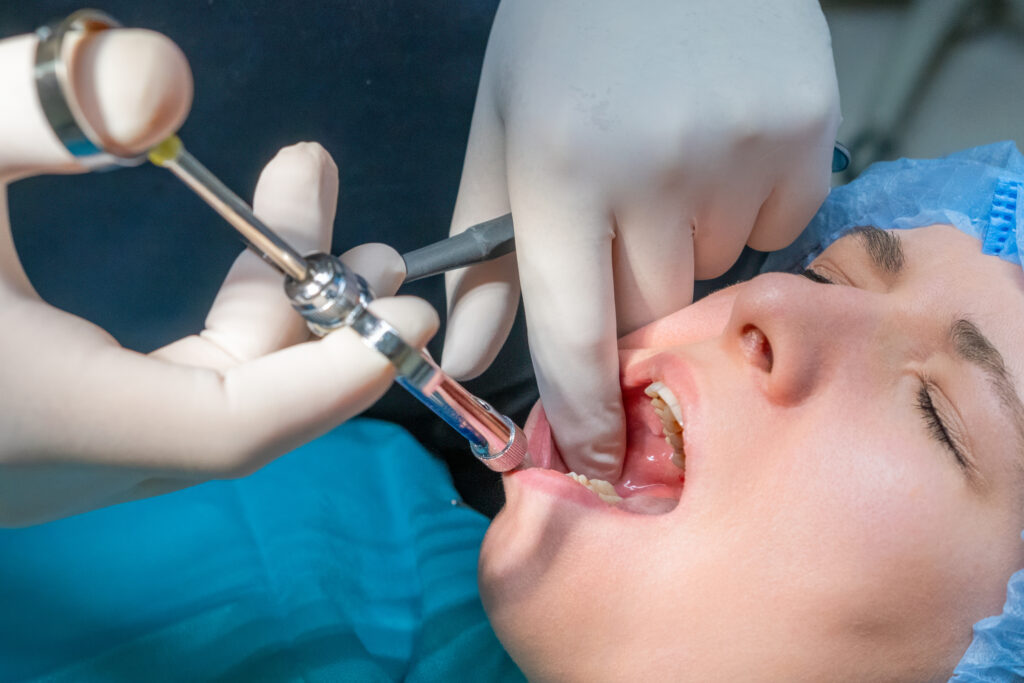
Being sedated actually protects your physical safety while you are in the chair. Dental procedures require sharp, high-speed instruments in a very small, sensitive space. If you suffer from severe anxiety, your body’s natural instinct is to flinch, jerk away, or unexpectedly close your jaw. Sudden movements are dangerous during delicate restorative work. By using oral conscious sedation or Nitrous Oxide, your muscles completely relax. With oral conscious sedation, medical literature indicates the clinical effects of benzodiazepines, including sedative, muscle relaxant, antiseizure, amnesic, and anxiolytic effects [1] (Donaldson et al., 2007). This eliminates sudden muscle spasms and drastically suppresses a hyper-sensitive gag reflex. By keeping your body calm and still, sedation allows our clinical team to work with absolute precision, protecting your teeth, gums, and tongue from accidental trauma.
Pediatric Sedation: Is It Safe for Your Child?
Pediatric sedation is safe when administered by a trained clinical team following strict, weight-based protocols. Clinical evidence supports that Pediatric dental sedation allows the clinician to provide treatment in a minimally traumatic manner and preserves the child’s trust [2] (Nelson et al., 2015). For young children, we almost exclusively rely on Nitrous Oxide (laughing gas). It is widely considered the gold standard for pediatric dental safety because it does not put your child to sleep and clears from their tiny lungs in just minutes. Every single dose is carefully calibrated to your child’s exact age, weight, and respiratory rate. Most importantly, your child is never left unattended for even a single second while the medication is active.
Navigating Sedation with Pre-Existing Medical Conditions
A common fear for adult patients is how sedation will interact with their specific health struggles. If you are managing a chronic illness, you can still safely receive dental sedation; we just have to plan accordingly. During your medical clearance exam, we look for specific physiological red flags. For example, if you have asthma, severe COPD, or frequent sinus congestion, Nitrous Oxide might not be safe because it relies entirely on your ability to breathe deeply through your nose. If you are diabetic and choosing oral conscious sedation, we will carefully help you manage your fasting guidelines so your blood sugar does not drop dangerously low before your appointment. By sharing your complete medical history, we can select the most appropriate route of administration for your body.
The Science of Reversal Agents: Your Ultimate Safety Net
Clinical literature suggests that Reversal agents are a key part of sedation and anesthesia practice in dental settings [3] (Wong et al., 2022). The ultimate fear of being sedated is the loss of control. You can rest easy knowing that we do not just rely on hope; we rely on advanced pharmacology. Our Wilmington clinic is fully equipped with emergency reversal agents. If we are utilizing oral conscious sedation, we keep specific medications on hand that act as an immediate reversal. If your breathing ever becomes too shallow or your blood pressure drops, we can administer a reversal agent that instantly neutralizes the sedative in your bloodstream, waking you up in seconds. If you are using Nitrous Oxide, the reversal agent is even simpler: we immediately switch your mask to deliver 100% pure, medical-grade oxygen.
Vital sign monitored | Clinical equipment used | Why we track it | Clinical response |
Blood oxygen | Finger pulse oximeter | Ensures the lungs are delivering oxygen to the vital organs | If levels drop, oxygen is increased |
Heart rate | Pulse oximetry sensor | Monitors appropriate blood delivery to vital organs | We can adjust the medication dosage |
Blood pressure | Automated BPO could | Monitor for both hypo and hypertensive episodes | Titrate the local numbing agents or sedation levels, or administer reversal agents |
Respiratory rate | Visual and sensor tracking | Ensure your natural drive to breathe is steady and appropriate oxygen exchange | Provide gentle verbal stimulation or reposition your airway |
Our In-Office Emergency Readiness and Technology
While severe adverse reactions to mild and moderate dental sedation are rare, Azalea Dental is engineered to handle any situation. Our clinical team undergoes rigorous, ongoing training in emergency airway management and Basic Life Support (BLS). Our treatment rooms are outfitted with hospital-grade emergency technology, including:
- Automated External Defibrillators (AEDs): Instantly accessible in the rare event of a cardiac emergency.
- Positive Pressure Oxygen Tanks: To assist with breathing and airway clearance.
- Emergency Crash Kits: Fully stocked with epinephrine, antihistamines, and rapid-response medications.
FAQS
1. Is it safe to be sedated if I have high blood pressure?
In most cases, yes. In fact, for patients with hypertension triggered by severe anxiety, sedation is often recommended. By keeping you deeply relaxed, sedation minimizes the risk of dangerous blood pressure fluctuations that typically happen when you panic in the dental chair.
2. Can I use sedation for a routine dental cleaning?
Absolutely. While sedation is famous for complex procedures, it is universally safe for routine preventive care. If you suffer from severe dental anxiety or a hyper-sensitive gag reflex, we can safely administer Nitrous Oxide or oral sedation so you can comfortably receive your bi-annual periodontal exams and cleanings.
3. What happens if I wake up during the procedure?
With oral conscious sedation, you are actually never fully “asleep” in a medical sense; you are in a state of relaxation and can still respond to our instructions. Because we continuously monitor your vitals, we can easily see if your heart rate indicates you are becoming alert or anxious.
References
[1] Donaldson, M., Gizzarelli, G., & Chanpong, B. (2007). Oral sedation: a primer on anxiolysis for the adult patient. Anesthesia progress, 54(3), 118–129. https://doi.org/10.2344/0003-3006(2007)54[118:OSAPOA]2.0.CO;2
[2] Nelson, T. M., & Xu, Z. (2015). Pediatric dental sedation: challenges and opportunities. Clinical, cosmetic and investigational dentistry, 7, 97–106. https://doi.org/10.2147/CCIDE.S64250
[3] Wong M. (2022). Reversal Agents in Sedation and Anesthesia Practice for Dentistry. Anesthesia progress, 69(1), 49–58. https://doi.org/10.2344/anpr-69-01-09