
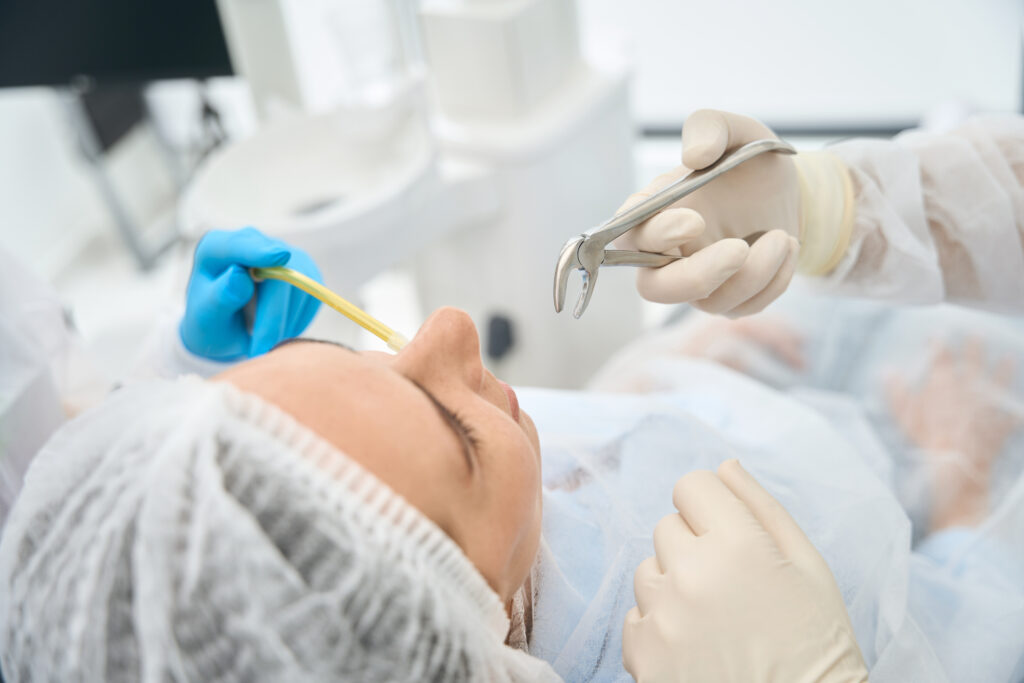
A tooth extraction is a modern, highly controlled dental procedure used to safely remove a severely decayed, infected, or fractured tooth from its socket. Utilizing advanced local anesthetics and precise instrumentation, Azalea Dental performs this targeted treatment to instantly eliminate pain and stop infection from spreading into your jawbone.
Sedation and Comfort: Tailoring Your Experience
Many patients put off necessary extractions because they are terrified of the sights, sounds, and sensations of the dental chair. At Azalea Dental, we put you entirely in the driver’s seat of your comfort. Beyond our ultra-effective local anesthetics, we also offer relaxing sedation options, such as Nitrous Oxide (laughing gas). This mild, safe sedative gently lowers your heart rate and eases feelings of panic while keeping you awake and responsive. The effects of laughing gas wear off within minutes of removing the mask, meaning you can safely drive yourself home after your appointment.
The Hidden Hero: Why Socket Preservation Matters
The medical literature indicates that implant treatment in areas with bone deficiency is extremely challenging [1] (Yankov et al., 2023). When we remove a tooth, it leaves behind an empty hole in the gums and jawbone. Because your jawbone relies on the pressure of your tooth roots to stay strong, that bone can begin to shrink and resorb once the tooth is gone. Over time, this bone loss can alter your facial structure and cause your neighboring teeth to shift dangerously out of place. To prevent this, Dr.Barbaro strongly recommends a procedure called “Socket Preservation” (or a bone graft) at the time of your extraction. Right after the tooth is removed, we place a specialized, biocompatible grafting material directly into the empty socket. This simple 60-second step encourages your body to build new, dense bone.
Table that compares recovery options
Extraction type | Clinical description | Estimated healing time | Long-term maintenance |
Simple extraction | Removing a tooth that is fully visible | 24-48 hours | Low |
Surgical extraction | Removing a tooth broken at the gumline | 3-5 days | Low |
Wisdom tooth removal | Extracting impacted third molars trapped beneath the bone | 5-7 days | None |
Managing Post-Extraction Soreness Like a Pro
Clinical literature supports that postoperative pain is one of the two most common complications of extraction surgery, along with dry socket [2] (Rakhshan et al., 2015). Once your appointment is over and the local numbing naturally wears off, it is completely normal to experience mild soreness and localized swelling. However, soreness should not mean agony. By staying ahead of the inflammation, you can keep your recovery entirely manageable. For the first 24 hours, ice is ideal for healing. Wrap a cold pack in a soft towel and hold it against your cheek for 15 minutes on and 15 minutes off. This restricts blood flow and drastically reduces facial swelling. Additionally, taking an over-the-counter anti-inflammatory (like Ibuprofen) before the dental numbing completely wears off will help prevent a sudden spike in discomfort. We will provide you with a customized, easy-to-follow medication schedule before you leave our office.
Healing Timelines: Normal Recovery vs. When to Call Us
After an extraction, it can be common to overanalyze every sensation in your mouth. Knowing what is normal will give you immense peace of mind during your recovery at home.
- What is completely normal: It is normal to see a slight pinkish tint in your saliva for the first 24 to 48 hours. You may also experience mild jaw stiffness and peaking swelling on day two or three.
- When to call us: Contact our Wilmington clinic immediately if you experience a high fever, severe nausea, or sudden worsening of pain after the third day. A sudden, sharp increase in throbbing pain often indicates the premature loss of your blood clot, and we can quickly treat it in the office to get you comfortable again.
Looking Ahead: Your Options for Replacing the Extracted Tooth
Your priority is to relieve your pain, but your long-term goal is to restore a complete, confident smile. Leaving a permanent gap where a tooth used to exist can force your remaining teeth to work twice as hard, leading to premature wear and bite alignment issues. Once your gums have healed, we will invite you back to Azalea Dental to discuss your replacement blueprint. If you want a durable, natural-feeling option, a dental implant serves as an artificial root that permanently secures a new tooth in your jaw. If you want a faster, non-surgical route, a dental bridge securely anchors a custom prosthetic to your neighboring teeth. We will help you weigh the longevity, aesthetics, and maintenance of each option so you can restore your smile exactly the way you want to.
FAQS
1. How do I prevent a "dry socket" after my extraction?
A dry socket occurs when the protective blood clot in your healing gums dislodges. To prevent this, avoid using a straw, smoking, or vigorously spitting for at least 72 hours after your procedure.
2. What can I eat during the first few days of recovery?
Stick to a soft-food diet for the first 48 hours. Excellent options include protein shakes, applesauce, yogurt, scrambled eggs, and lukewarm soups.
3. Will I need to take time off work?
For a simple extraction, most professionals can return to work the very next day. If you require a more complex surgical extraction or are having multiple teeth removed, we recommend taking 24 to 48 hours of rest.
References
[1] Yankov Y. G. (2023). Socket Preservation and Guided Bone Regeneration: Prerequisites for Successful Implant Dentistry. Cureus, 15(11), e48785. https://doi.org/10.7759/cureus.48785
[2] Rakhshan V. (2015). Common risk factors for postoperative pain following the extraction of wisdom teeth. Journal of the Korean Association of Oral and Maxillofacial Surgeons, 41(2), 59–65. https://doi.org/10.5125/jkaoms.2015.41.2.59