
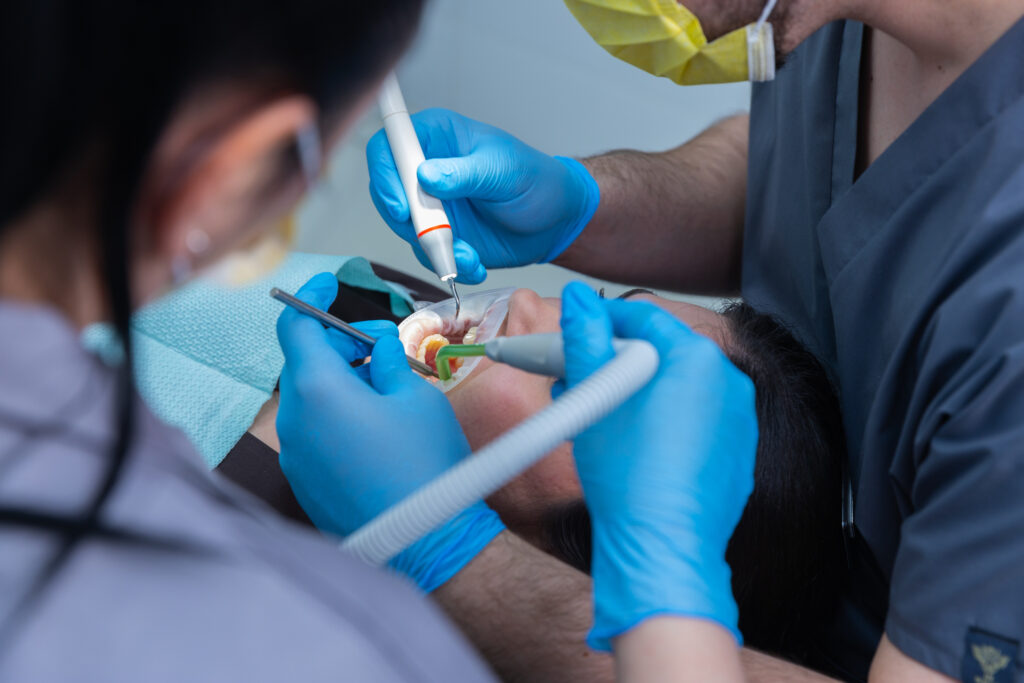
Tooth extraction with sedation dentistry is a specialized oral surgery protocol at Azalea Dental that utilizes medical sedatives to eliminate physical pain, suppress the gag reflex, and relieve severe psychological anxiety while a damaged or infected tooth is safely removed.
The Biology of Dental Fear: How Sedation Overrides Your "Fight or Flight" Response
Severe dental anxiety can trigger your sympathetic nervous system. Your brain floods your bloodstream with adrenaline, your heart rate spikes, and your muscles become incredibly tense. From a clinical perspective, this adrenaline rush actually causes standard local anesthetics (like Novocain) to be processed through your body too quickly. Sedation dentistry solves this biological problem. Pharmacological sedatives target the central nervous system to suppress the release of adrenaline. By artificially calming your brain’s fear center, your heart rate stabilizes, and your jaw muscles relax. Not only does this stop your emotional panic, but it also allows the local numbing medication to work much more effectively. Clinical evidence supports that people with high dental fear are more likely to delay treatment, leading to more extensive dental problems [1] (Armfield et al., 2007).
Comparing options for sedation
Sedation modality | Cost impact | Experiences | Recovery maintenance level |
Local numbing only | Included in procedure-based cost | Fully awake | Zero |
Nitrous oxide | Low to moderate | Mild euphoria | Low |
Oral conscious | Moderate | Deep relaxation | High |
How to Prepare for Your Sedated Tooth Extraction
To ensure your sedation extraction is safe and predictable, your preparation begins hours in advance. Unlike a standard dental filling, which you can walk in for, sedation requires a few specific biological parameters to be met. Our clinical team at Azalea Dental will provide you with a customized preparation checklist, which includes:
- Fasting Guidelines: If you are receiving oral conscious sedation or IV sedation, you must have an empty stomach.
- Medication Management: You will need to provide us with a list of all your daily medications.
- Dress for Comfort: Wear loose, comfortable clothing with short sleeves so our team can easily monitor your vital signs and blood pressure throughout the procedure.
- Driver: Because moderate to deep sedatives cause heavy drowsiness and temporary amnesia, it is illegal for you to drive.
When is Sedation Highly Recommended for an Extraction?
Medical literature suggests that sedation techniques, particularly the midazolam-sufentanil and ketamine-midazolam combinations, are effective and safe for managing dental procedures in adults [2] (Sharma et al., 2024). While sedation is a good option for anyone with high anxiety, there are specific clinical scenarios where Dr. Barbaro typically recommends sedation for your physical safety and comfort. Removing a fully erupted, single-rooted front tooth takes a fraction of the time it takes to remove a shattered molar. Sedation is strongly advised if you require a surgical extraction. This includes teeth that have broken off below the gumline, and deeply impacted wisdom teeth trapped inside the jawbone. These complex procedures require you to keep your mouth open for an extended period. Sedation prevents the severe jaw fatigue and TMJ discomfort associated with longer surgeries. Furthermore, if you have a highly sensitive gag reflex that makes standard dental work difficult, sedation acts as a temporary off-switch, allowing our team to work safely.
Waking Up: Your Post-Sedation Recovery Timeline
If you choose a heavier option like oral conscious sedation, your recovery is a carefully guided process. When the extraction is complete, you will likely feel groggy, as if you are waking up from a very deep, restful nap. Because these medications often carry an amnesic effect, you might not realize the procedure has already happened. We will allow you to rest in our comfortable clinical chair until your vital signs stabilize and you can stand safely. Once your designated driver takes you home, your only job for the next 24 hours is to rest. The local numbing medication injected into your gums will take a few more hours to wear off. This creates a perfect window of opportunity to fill any prescribed pain medications or take over-the-counter anti-inflammatories before you feel soreness. By the time the surgical numbing wears off, your at-home pain management will already be working, ensuring a seamless, comfortable transition into your healing phase.
The Ultimate Solution for Severe Needle Phobia
Medical literature indicates that camouflaged dental syringes that hide the local anesthesia needle have shown promise in enhancing the behavioral response to pain [3] (Bagher et al., 2023). Trypanophobia (the extreme fear of medical needles) prevents thousands of people from getting the urgent dental care they need. If the sight of a syringe makes you dizzy or faint, sedation dentistry is your ultimate workaround. When you opt for oral conscious sedation, we reverse the standard clinical order. You take a small, simple pill before the procedure begins. We never administer the local numbing injection until you are fully sedated. By the time Dr. Barbaro applies the localized anesthetic to your gums, you are already relaxed or asleep. You will never see the needle, and because your nervous system is suppressed, you will not care or feel the pinch.
FAQS
1. Do you offer sedation for tooth extractions at Azalea Dental?
Yes, absolutely. We specialize in providing targeted sedation options for both simple and surgical extractions.
2. Will I feel any pain while my tooth is being pulled under sedation?
No. Sedation dentistry works in tandem with local anesthetics. The sedative medication eliminates your anxiety and relaxes your body, while the localized numbing medication completely blocks the pain receptors in your jaw.
3. Can I drive myself home after a tooth extraction under sedation?
This depends entirely on the type of sedation you receive. If you only receive Nitrous Oxide (laughing gas), the effects wear off completely within five minutes, and you are legally safe to drive yourself home through the Novant Health district. However, if you opt for Oral Conscious Sedation or IV sedation, the medication stays in your system for several hours.
About The Author
Dr. Colin Barbaro, DDS, provides comprehensive general and cosmetic dentistry at Azalea Dental in Wilmington, NC. With advanced surgical training from a VA hospital residency, he specializes in implant placement, TMJ therapy, restorative care, and endodontics. He is committed to delivering safe, evidence-based solutions that keep patients comfortable and informed at every step.
References
[1] Armfield, J. M., Stewart, J. F., & Spencer, A. J. (2007). The vicious cycle of dental fear: exploring the interplay between oral health, service utilization and dental fear. BMC oral health, 7, 1. https://doi.org/10.1186/1472-6831-7-1
[2] Sharma, M., Sahu, A. K., Kaila, P., Hassan, A. A. H. A. A., Mansy, M., Thakur, R., & Homeida, H. E. (2024). Retrospective Evaluation of Sedation Techniques for Tooth Extraction in Paediatric Patients. Journal of pharmacy & bioallied sciences, 16(Suppl 4), S3150–S3152. https://doi.org/10.4103/jpbs.jpbs_637_24
[3] Bagher, S. M., Felemban, O. M., Alsabbagh, G. A., & Aljuaid, N. A. (2023). The Effect of Using a Camouflaged Dental Syringe on Children’s Anxiety and Behavioral Pain. Cureus, 15(12), e50023. https://doi.org/10.7759/cureus.50023