
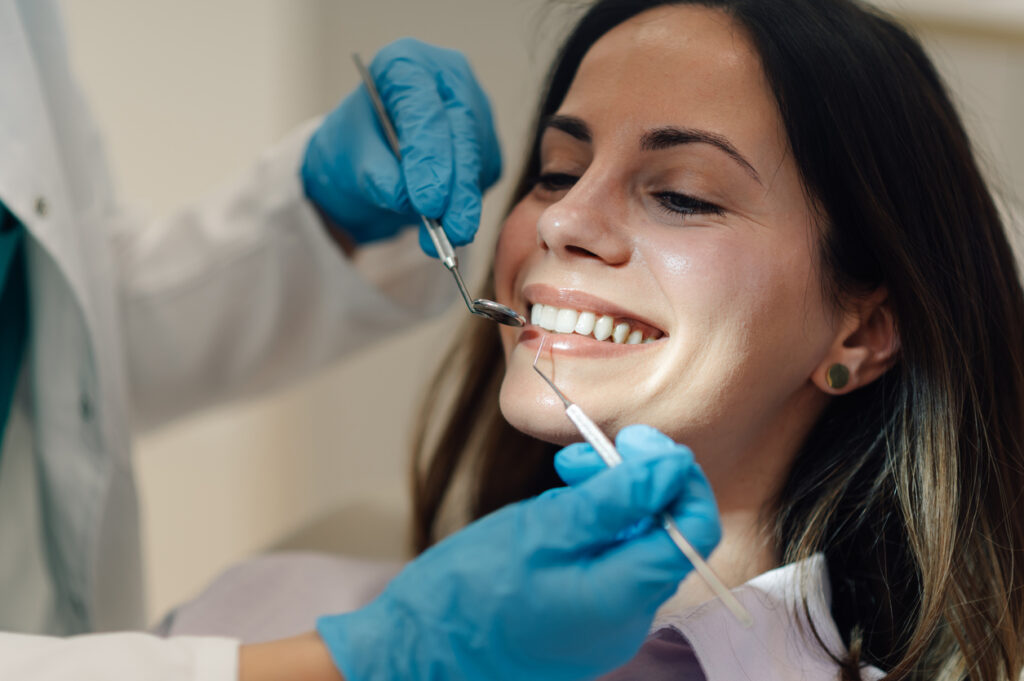
A cracked tooth exam is a targeted diagnostic evaluation used to pinpoint the exact source of sharp pain when you bite down. By utilizing specialized bite tests, transillumination, and targeted digital X-rays, our clinical team quickly identifies microscopic fractures that cause Cracked Tooth Syndrome so you can find immediate relief.
Biting Pain vs. Constant Aches
Not all toothaches mean the same thing. If you are experiencing a constant, dull throb that keeps you awake at night, you are likely dealing with a deep infection or an abscess. However, a cracked tooth behaves very differently. With Cracked Tooth Syndrome, the pain is usually sharp, localized, and entirely pressure-dependent. Medical literature supports that cracked tooth syndrome is characterized by an unknown-depth fracture plane traversing the tooth’s structure [1] (John et al., 2024). You might feel totally fine until you bite down on a nut, a seed, or even a piece of soft bread at the wrong angle. Many patients also experience a sharp zing of pain when they release their bite. This “rebound pain” occurs because the tiny fracture in your enamel snaps back into place, aggravating the nerve inside.
The Danger of Compensation
When one side of your mouth hurts, your brain naturally steps in to protect you. Without even realizing it, you will start chewing all your food on the opposite, pain-free side of your mouth. While this seems like a smart temporary fix, it is actually a dangerous trap. By shifting all your chewing force to just one side of your jaw, you are forcing half of your teeth to do double the work. Over time, this uneven pressure can lead to severe TMJ (jaw joint) pain, muscle fatigue, and even cause the healthy teeth on your “good” side to wear down or fracture under the extra stress. Fixing the original cracked tooth at Azalea Dental immediately restores the balance to your bite, protecting your entire smile from collateral damage.
Table that compares tooth fractures and treatments
Fracture type | Clinical description | Typical treatment focus | Long-term durability |
Craze lines | Tiny, superficial cracks in the outer enamel | Purely cosmetic | Lifetime |
Fractured cusp | A piece of the tooth chewing surface breaks off | Easily restored with a filling or porcelain crown | 10-15 years |
Cracked tooth | Crack extending from the chewing surface down toward the root | Often requires a dental crown | 10-15 years |
Split tooth | Severe crack that splits the tooth into distinct segments | Requires partial or full extraction | Permanent |
How Nighttime Grinding Causes Tooth Fractures
Clinical evidence supports the notion that damage from bruxism can be minor or substantial, affecting hard tissues, including attrition of occlusal surfaces and fractures of teeth or restorations [2] (Thayer et al., 2022). In many cases, the damage happens while you are fast asleep. Bruxism, or unconscious teeth grinding, is the leading cause of hairline tooth fractures. When you clench your jaw at night, you can exert up to 250 pounds of force directly onto your teeth. Over the years, this immense pressure can weaken your protective enamel, creating stress fractures. During your cracked tooth exam, Dr. Barbaro does not just look for the crack; he also looks for signs of wear and tear on your other teeth. If nighttime grinding is the culprit, we can easily create a custom night guard to protect your newly repaired tooth and prevent future fractures.
Safe At-Home Care While You Wait for Your Appointment
We know that waiting for a dental appointment can be stressful when you are worried about triggering a sudden jolt of pain. While you cannot cure or heal a cracked tooth at home, there are a few safe ways to manage your comfort:
- Soft Diet: Stick to smoothies, yogurt, mashed potatoes, and soups. Avoid anything crunchy, chewy, or sticky.
- Extreme Temperatures: A cracked tooth often exposes sensitivity to temperature changes.
- Saltwater rinse: Gently swishing warm salt water can help soothe the surrounding gum tissue.
- Use OTC Relief Safely: Over-the-counter anti-inflammatory medications can help manage lingering soreness, but never apply pain-relieving gels directly to the gumline, as this can burn the tissue.
What Happens Immediately After We Find the Tooth Crack?
The best part of your diagnostic exam is that you do not have to leave our office in pain. Once our transillumination and bite tests pinpoint the fracture’s exact location, we pivot to stabilization. Our primary goal is to seal the crack so it no longer flexes when you bite down. Depending on the severity of the fracture, a smooth, tooth-colored composite resin can be applied over the tooth, or the tooth can be prepared for a protective porcelain crown. By wrapping the tooth in a protective layer, cracking can be prevented. You will walk out of our office with your tooth stabilized, your pain eliminated, and your confidence restored, ready to eat your next meal without fear.
FAQS
1. Why did my cracked tooth not show up on my last routine X-ray?
Standard X-rays are two-dimensional shadows. If the X-ray beam does not pass perfectly parallel through the microscopic fracture line, the crack will simply not appear on the image. This is why we rely on physical bite tests and transillumination to diagnose Cracked Tooth Syndrome.
2. Can a cracked tooth heal on its own?
No. Tooth enamel does not contain the biological cells necessary for healing or regeneration.
3. Does a cracked tooth always mean I need an extraction?
Absolutely not. If the crack is caught early while it is still above the gum line, we can usually save your natural tooth.
References
[1] John K, Pepper T. Cracked Tooth Syndrome. [Updated 2024 May 7]. In: StatPearls [Internet]. Treasure Island (FL): StatPearls Publishing; 2026 Jan-. Available from: https://www.ncbi.nlm.nih.gov/books/NBK606115/
[2] L T Thayer, M., & Ali, R. (2022). The dental demolition derby: bruxism and its impact – part 1: background. British dental journal, 232(8), 515–521. https://doi.org/10.1038/s41415-022-4143-8