
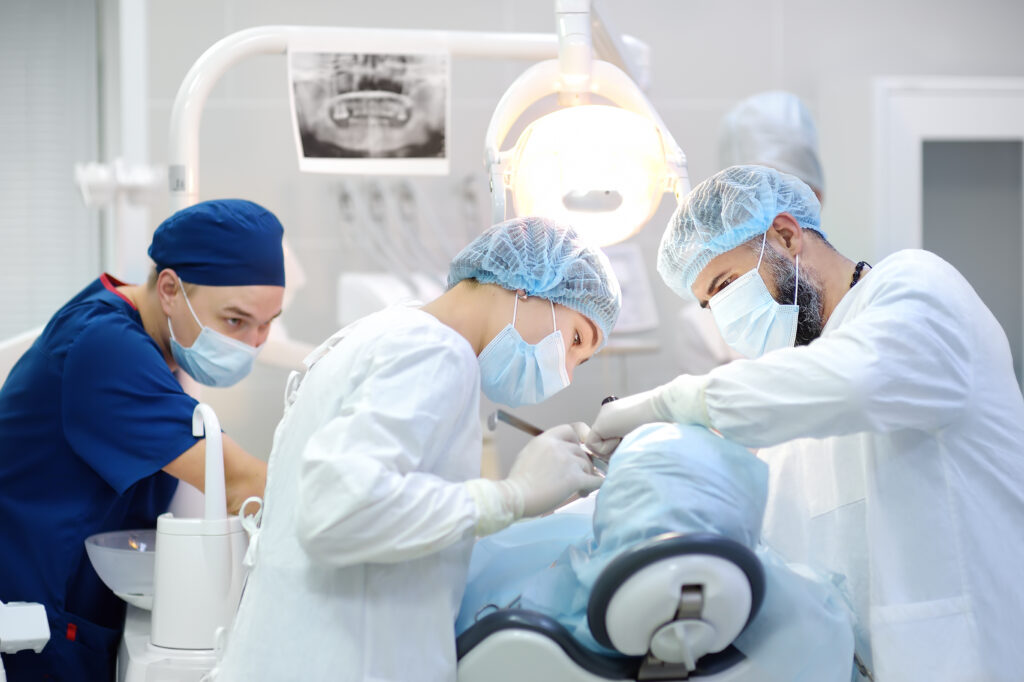
Sleep dentistry at Azalea Dental refers to deep sedation or general anesthesia, where a patient is completely unconscious and unresponsive. In contrast, conscious sedation uses mild to moderate medications that keep you awake, breathing on your own, and able to respond to your dentist.
Who is the Ideal Candidate for Conscious Sedation?
Conscious sedation is not just for patients with severe dental phobias. While it works wonders for calming a racing heart, this medication is also a powerful clinical tool for overcoming physical barriers to dental care. You are an excellent candidate for oral conscious sedation or nitrous oxide if you have an overly sensitive gag reflex that makes taking X-rays or getting cleanings unbearable. Sedation is also highly recommended for patients who have a hard time responding to standard local anesthetics, or those who suffer from TMJ pain leading to difficulty in keeping their jaws open. By relaxing your central nervous system, we remove both the mental and physical roadblocks standing between you and a healthy smile.
Maximizing Your Time: Completing Multiple Treatments at Once
One of the greatest, hidden benefits of conscious sedation is treatment efficiency. Because the medication suppresses your physical fatigue and mental anxiety, Dr. Barbaro can work much faster. Instead of breaking your dental work into three or four separate, stressful visits, we can often complete months’ worth of treatments in a single, sedated appointment. You save hours of time off work, minimize your trips to the clinic, and wake up to a completely restored smile.
How We Monitor Your Safety in the Dental Chair
A common fear associated with sedation is the loss of control or the worry that something might go wrong while under sedation. Even though you are legally awake and breathing on your own during conscious sedation, we monitor you just as closely as if you were asleep. Before the procedure begins, we attach a specialized pulse oximeter to your finger to continuously monitor your blood oxygen saturation and heart rate. Medical literature supports the conclusion that pulse oximetry is a more sensitive monitor of mild-to-moderate hypoxemia than measurements of heart rate, blood pressure, and respiratory rate [1] (Mueller et al., 1985). We also monitor your blood pressure throughout the entire visit. Our clinical team is highly trained in advanced airway management and emergency protocols, ensuring that you remain safe, stable, and comfortable from the moment you take the medication until you are ready to go home.
Preparing for Your Sedation Visit
Because oral conscious sedation slows down your central nervous system, your preparation must begin the night before. To ensure the medication is absorbed safely and predictably into your bloodstream, we typically require you to fast for a few hours before your appointment. Clinical evidence supports that for sedation, careful premedication evaluation with respect to airway, fasting, and understanding of the pharmacodynamics and pharmacokinetics of the drugs must be established [2] (Kapur et al., 2018). Furthermore, wear loose, comfortable, short-sleeved clothing so we can easily attach our blood pressure monitors. Most importantly, because the medication causes heavy drowsiness and delayed reaction times, you cannot drive yourself to or from our clinic. You must bring a trusted designated driver who will remain at the office and safely escort you home afterward.
Table that compares comfort options
Sedation category | CLinical state | Estimate cost | Prep |
Nitrous oxide | Fully awake | Affordable | Very low |
Oral conscious sedation | Awake but relaxed | Moderate | High |
IV sedation | Completely unconscious | High | Very High |
What Your Recovery Day Actually Looks Like
Clinical literature supports that post-discharge excessive somnolence during transit and while at home, and to a lesser extent, nausea and emesis, were frequent complications with oral sedation (Huang et al., 2015). If you choose oral conscious sedation, your appointment does not officially end when you leave the dental chair; it ends after a full day of rest. When your designated driver takes you home, you will still feel groggy and lethargic. You might even find that your “amnesia” effect is still slightly active, meaning you may repeat questions or feel a bit confused. This is completely normal. Your only job for the next 12 to 24 hours is to lie on the couch, stay hydrated with clear liquids, and sleep the medication off. The next day, the sedatives will have completely cleared your system, leaving you clear-headed, fully recovered, and ready to show off your newly repaired smile.
FAQS
1. Can I request Oral conscious sedation for a routine dental cleaning?
Generally, no. Because deep sedation and general anesthesia carry higher medical risks and require extensive monitoring, they are not medically justified for a routine bi-annual cleaning.
2. How do I know which level of sedation is safe?
Before any sedatives are prescribed, dentists review a comprehensive medical history.
3. Does dental insurance cover deep sedation?
Most standard dental insurance plans view sedation as an “elective” comfort measure and do not cover it.
References
[1] Mueller, W. A., Drummond, J. N., Pribisco, T. A., & Kaplan, R. F. (1985). Pulse oximetry monitoring of sedated pediatric dental patients. Anesthesia progress, 32(6), 237–240.
[2] Kapur, A., & Kapur, V. (2018). Conscious Sedation in Dentistry. Annals of maxillofacial surgery, 8(2), 320–323. https://doi.org/10.4103/ams.ams_191_18
[3] Huang, A., & Tanbonliong, T. (2015). Oral Sedation Postdischarge Adverse Events in Pediatric Dental Patients. Anesthesia progress, 62(3), 91–99. https://doi.org/10.2344/0003-3006-62.3.91